
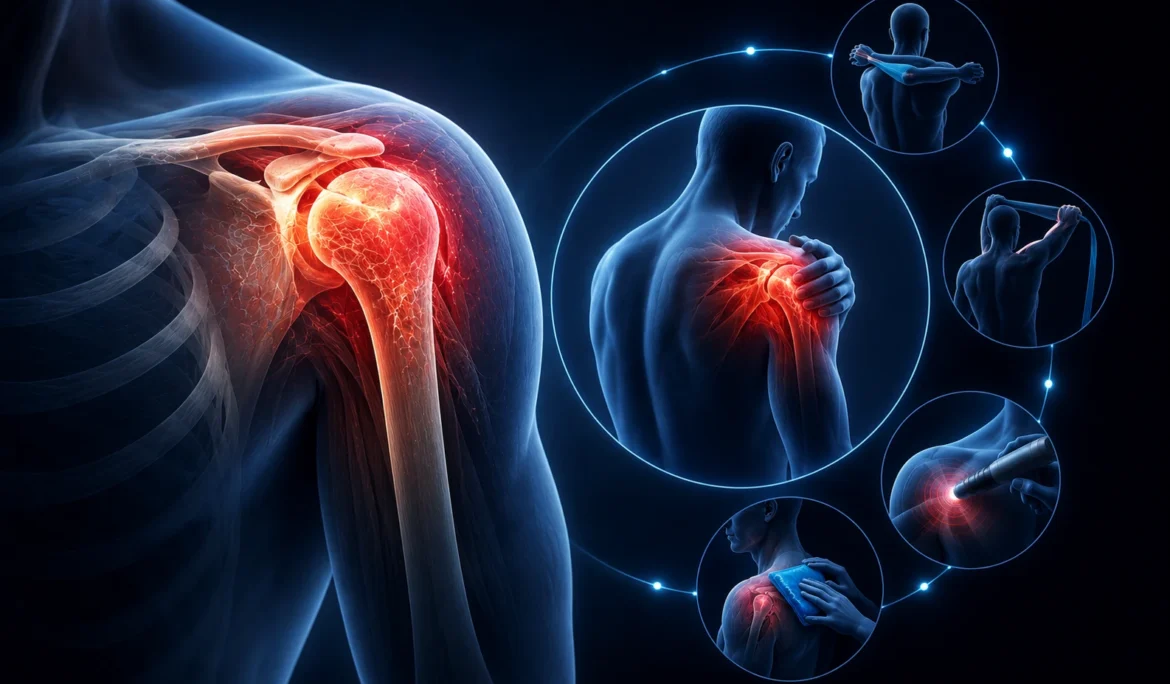
Adults between 40 and 60 years of age face the highest risk of developing frozen shoulder, also called adhesive capsulitis. Frozen shoulder causes pain, stiffness, and progressive restriction of shoulder movement due to thickening and tightening of the shoulder capsule. Many patients in Delhi initially notice difficulty while lifting the arm, reaching overhead, or sleeping on the affected side.
Frozen shoulder usually develops gradually and progresses through multiple stages over several months. The condition commonly affects people with diabetes, thyroid disorders, shoulder injuries, or prolonged arm immobility after surgery or fracture. Orthopedic specialists also observe higher risk among office professionals with limited shoulder movement and repetitive postural strain.
The American Academy of Orthopaedic Surgeons states that the freezing stage alone may continue for 2–9 months with increasing pain and stiffness. Without timely treatment, shoulder mobility can reduce significantly and daily activities may become difficult.
Frozen shoulder treatment commonly includes pain-management medicines, physiotherapy, stretching exercises, steroid injections, hydrodilatation, and arthroscopic surgery in severe cases. Orthopaedics clinics in Dwarka, and Gurgaon usually begin treatment with mobility assessment, physical examination, and imaging tests to identify stiffness severity and rule out rotator cuff injuries or arthritis.
Patients searching for the best orthopaedic in Dwarka or a bone specialist in Gurgaon should verify shoulder rehabilitation experience, physiotherapy support, and long-term recovery planning before beginning treatment.
Causes of Frozen Shoulder in Delhi Patients
Orthopaedic specialists in Delhi commonly diagnose frozen shoulder in patients experiencing long-term shoulder stiffness, restricted movement, and chronic inflammation around the shoulder capsule.
Common Medical Causes
The American Academy of Orthopaedic Surgeons reports that diabetic patients may face up to 5 times higher frozen shoulder risk compared with non-diabetic individuals. High blood sugar levels can affect connective tissues around the shoulder joint and gradually reduce mobility.
Patients recovering from shoulder fractures, rotator cuff injuries, breast surgery, stroke, or prolonged hospitalization also face increased risk. Reduced shoulder movement after surgery or injury may cause tightening of the shoulder capsule and scar tissue formation.
Thyroid disorders, cardiovascular disease, and Parkinson’s disease may also contribute to frozen shoulder development. Long office-working hours, poor posture, repetitive desk work, and limited physical activity can gradually reduce shoulder flexibility.
Frozen Shoulder 4 Stages Explained
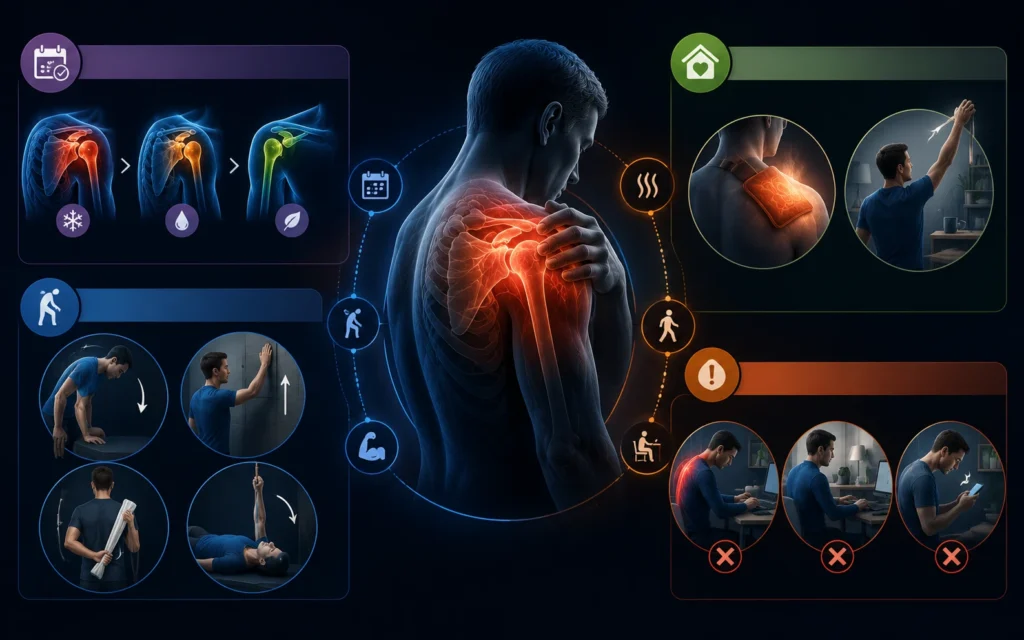
The freezing stage of frozen shoulder may continue for 2–9 months with increasing pain and progressive movement restriction. Orthopaedic specialists in Delhi classify frozen shoulder into 4 stages based on pain severity, stiffness progression, and shoulder mobility loss.
Stage 1: Pre-Freezing Stage
The pre-freezing stage usually lasts between 1 and 3 months. Patients commonly experience mild shoulder pain during movement, difficulty reaching overhead, and discomfort while sleeping on the affected side.
Shoulder movement may remain mostly normal during this phase, which often delays diagnosis. Early physiotherapy and stretching exercises may reduce progression if treatment begins quickly.
Stage 2: Freezing Stage
The freezing stage can continue for 2–9 months with gradually worsening pain and stiffness. Patients often notice severe difficulty while dressing, lifting objects, combing hair, or rotating the shoulder.
Clinics in Dwarka and Gurgaon frequently recommend pain-management medication, supervised physiotherapy, and mobility exercises during this phase to maintain joint movement and reduce inflammation.
Stage 3: Frozen Stage
The frozen stage may last between 4 and 12 months. Pain may gradually reduce, but shoulder stiffness becomes severe and movement restriction increases significantly.
Many patients struggle with daily activities such as driving, lifting the arm, or wearing clothes without assistance. Orthopaedic specialists may recommend steroid injections, hydrodilatation, or advanced physiotherapy if conservative treatment fails.
Stage 4: Thawing Stage
The thawing stage commonly lasts between 6 months and 2 years depending on treatment timing, physiotherapy compliance, and underlying medical conditions. Shoulder movement gradually improves during this phase and pain usually decreases substantially.
Patients undergoing regular stretching exercises and supervised rehabilitation often recover shoulder flexibility faster than individuals delaying treatment. Severe untreated frozen shoulder cases may still require arthroscopic surgery to release tight shoulder tissues and restore movement.
Frozen Shoulder Treatment in Dwarka, Gurgaon
Complete frozen shoulder recovery may require 12–36 months, depending on treatment timing, stiffness severity, and underlying medical conditions.
Non-Surgery Frozen Shoulder Treatment in Gurgaon
Pain-management medicines and physiotherapy remain the first-line treatment for most frozen shoulder patients. Doctors commonly prescribe anti-inflammatory medications to reduce pain and improve shoulder movement during the freezing and frozen stages.
Physio-Pedia states that physiotherapy programs may require several weeks to months before noticeable mobility improvement appears. Physiotherapists usually recommend supervised stretching exercises, range-of-motion training, and gradual strengthening movements to restore shoulder flexibility.
Surgical Frozen Shoulder Treatment
The frozen stage alone may continue for up to 12 months in severe cases with major movement restriction. Orthopedic surgeons usually consider surgery only when physiotherapy, medication, and injections fail to improve shoulder function.
Arthroscopic frozen shoulder surgery involves releasing tight shoulder capsule tissues through minimally invasive instruments inserted through small incisions. Many orthopedic hospitals in Delhi and Gurgaon combine surgery with post-operative physiotherapy to restore shoulder movement gradually.
Frozen Shoulder Workout and Home Remedies
Physiotherapy for frozen shoulder often require several weeks to months before significant mobility improvement appears.
Frozen Shoulder Exercises
- Pendulum exercises remain one of the most commonly recommended frozen shoulder workouts.
- Wall climbing exercises help restore overhead shoulder movement gradually.
- Towel stretches, cross-body stretches, and passive external rotation exercises may also improve flexibility during the frozen and thawing stages.
Home Remedies for Shoulder Stiffness
- Heat therapy for 10–15 minutes before exercise may help loosen tight shoulder tissues and reduce discomfort.
- Patients should maintain regular shoulder movement during daily activities instead of keeping the arm completely immobilized.
- Poor posture, prolonged desk work, and lack of stretching may worsen stiffness progression over time.
Frozen shoulder may continue for 12–36 months if treatment begins late or shoulder stiffness progresses without proper rehabilitation. Early diagnosis, physiotherapy, and structured mobility exercises remain important for reducing pain and restoring shoulder movement. Patients with diabetes, thyroid disorders, previous shoulder injuries, or prolonged arm immobility face higher risk and often require supervised orthopedic care.
Orthopaedic specialists in Delhi and Gurgaon commonly recommend stage-based treatment plans that include pain management, physiotherapy, stretching exercises, injections, and surgical intervention in severe cases. Patients experiencing persistent shoulder pain, night discomfort, or restricted arm movement should seek orthopedic evaluation before stiffness becomes permanent.
Looking for frozen shoulder treatment in Delhi, Dwarka, or Gurgaon? Connect with the orthopedic specialists at Doctor’s Hub for shoulder mobility assessment, physiotherapy guidance, pain-management treatment, and advanced orthopedic care planning based on your stage of frozen shoulder.