
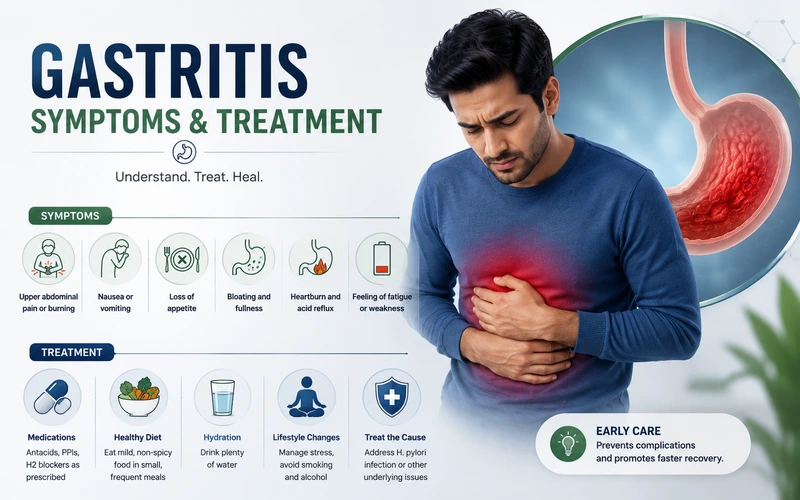
Around 50% of the world’s population is infected with Helicobacter pylori (H. pylori), one of the leading causes of chronic gastritis. However, not everyone with the infection develops symptoms. Gastritis can range from mild stomach irritation to severe inflammation that affects daily life and, if left untreated, may lead to ulcers or other digestive complications.
Gastritis is the inflammation of the stomach lining, which can occur suddenly (acute gastritis) or develop gradually over time (chronic gastritis). Common gastritis symptoms include upper abdominal pain, nausea, vomiting, bloating, loss of appetite, and a burning sensation in the stomach, particularly after eating. These symptoms may be triggered by H. pylori infection, prolonged use of pain-relieving medications, excessive alcohol consumption, smoking, stress, or certain gastritis causing foods.
If you are experiencing frequent stomach discomfort or ongoing digestive symptoms, consulting an experienced Gastritis Specialist in Delhi can help you receive an accurate diagnosis and appropriate Gastritis Treatment in Delhi based on your individual condition.
What Is Gastritis?
Gastritis is the inflammation of the stomach lining, a protective layer that shields the stomach from digestive acids. When this lining becomes irritated or damaged, stomach acid can inflame the tissue, leading to symptoms such as pain, burning, nausea, and indigestion.
Types of Gastritis
Listed below are the types of Gastritis:
Acute Gastritis
Acute gastritis develops suddenly and often lasts for a short period. It is commonly triggered by:
- Helicobacter pylori (H. pylori) infection
- Excessive alcohol consumption
- Frequent use of pain-relieving medicines such as aspirin or ibuprofen (NSAIDs)
- Severe illness or physical stress
With early diagnosis and appropriate treatment, acute gastritis usually improves within a few days to weeks.
Chronic Gastritis
Chronic gastritis develops slowly and may persist for months or even years if left untreated. It is often associated with long-term H. pylori infection, autoimmune disorders, prolonged NSAID use, or bile reflux. Over time, chronic inflammation can damage the stomach lining and increase the risk of stomach ulcers, vitamin B12 deficiency, and other digestive complications.
Gastritis Symptoms
Gastritis symptoms vary depending on the severity of inflammation and its underlying cause. Some people experience only mild discomfort, while others may develop persistent pain and digestive problems that interfere with daily life. In some cases, especially with chronic gastritis, there may be no noticeable symptoms until complications develop.
The most common gastritis symptoms include:
- Burning or aching pain in the upper abdomen
- Nausea or vomiting
- A feeling of fullness after eating a small amount of food
- Indigestion or upset stomach
- Bloating and excessive burping
- Loss of appetite
- Burning sensation in the stomach, especially between meals or at night
Gastritis: Reasons and Risk Factors
Gastritis develops when the protective lining of the stomach is damaged, allowing digestive acids to irritate and inflame the stomach wall. Several medical conditions, infections, medications, and lifestyle habits can contribute to this inflammation. Identifying these gastritis reasons is essential for effective treatment and preventing recurrence.
Common Gastritis Reasons
Helicobacter pylori (H. pylori) Infection
H. pylori is one of the most common causes of chronic gastritis. The bacteria damage the stomach’s protective lining, leading to persistent inflammation and increasing the risk of stomach ulcers if left untreated.
Long-Term Use of Pain Relievers
Frequent use of nonsteroidal anti-inflammatory drugs (NSAIDs), such as aspirin, ibuprofen, and naproxen, can weaken the stomach’s protective barrier and increase the risk of gastritis.
Excessive Alcohol Consumption
Alcohol can irritate and erode the stomach lining, making it more susceptible to inflammation and injury. Regular heavy alcohol intake significantly increases the risk of acute gastritis.
Smoking
Smoking reduces the stomach’s natural defense mechanisms and may delay healing of the stomach lining. It also increases the risk of developing ulcers and chronic gastritis.
Stress and Severe Illness
Physical stress caused by major surgery, severe infections, burns, or trauma can lead to acute gastritis. Emotional stress alone is not usually a direct cause but may worsen existing digestive symptoms in some individuals.
Diagnosis and Gastritis Treatment in Delhi
The treatment of gastritis depends on its underlying cause, severity, and duration of symptoms. While mild cases often improve with lifestyle modifications and medications, persistent or recurrent gastritis requires a thorough medical evaluation to identify conditions such as H. pylori infection, stomach ulcers, or other gastrointestinal disorders.
Diagnosis
To determine the cause of gastritis, your doctor may recommend one or more of the following tests:
- Medical history and physical examination
- H. pylori testing through a breath, stool, or blood test
- Upper gastrointestinal (GI) endoscopy to examine the stomach lining and detect inflammation, ulcers, or bleeding
- Biopsy, if needed, during endoscopy to evaluate stomach tissue
- Blood tests to check for anemia or vitamin B12 deficiency in selected cases
Treatment Options
Based on the diagnosis, your doctor may recommend:
- Antibiotics to eliminate H. pylori infection when present
- Proton pump inhibitors (PPIs) to reduce stomach acid and promote healing of the stomach lining
- H2 receptor blockers to decrease acid production
- Antacids for temporary relief from pain and acidity
- Stopping or replacing NSAIDs if they are contributing to gastritis, under medical supervision
- Lifestyle and dietary modifications to reduce irritation and prevent recurrence
Most patients also benefit from avoiding alcohol, quitting smoking, eating smaller meals, and limiting gastritis causing foods such as spicy, fried, acidic, and highly processed foods. If your symptoms feel serious, contact a gastritis specialist in Delhi.
Gastritis is a common digestive condition that can cause symptoms such as stomach pain, nausea, bloating, and indigestion. While mild cases may improve with lifestyle changes and appropriate medication, persistent or recurring symptoms should not be ignored, as untreated gastritis can lead to complications such as stomach ulcers or bleeding. Early diagnosis and timely treatment are essential for identifying the underlying cause and preventing long-term digestive problems.
If you are experiencing persistent gastritis symptoms or need reliable Gastritis Treatment in Delhi, the experienced gastro specialists at Doctor’s Hub provide comprehensive diagnosis and personalized treatment for acute and chronic gastritis. Whether your condition is caused by H. pylori infection, medications, our team focuses on identifying the root cause and developing an effective treatment plan tailored to your needs.
Book your consultation at Doctor’s Hub today and receive expert care from an experienced Gastro Specialist for effective diagnosis, treatment, and long-term digestive health.